
From Opportunity to Impact: Dante Harris's Journey with the Rio Ferdinand Foundation
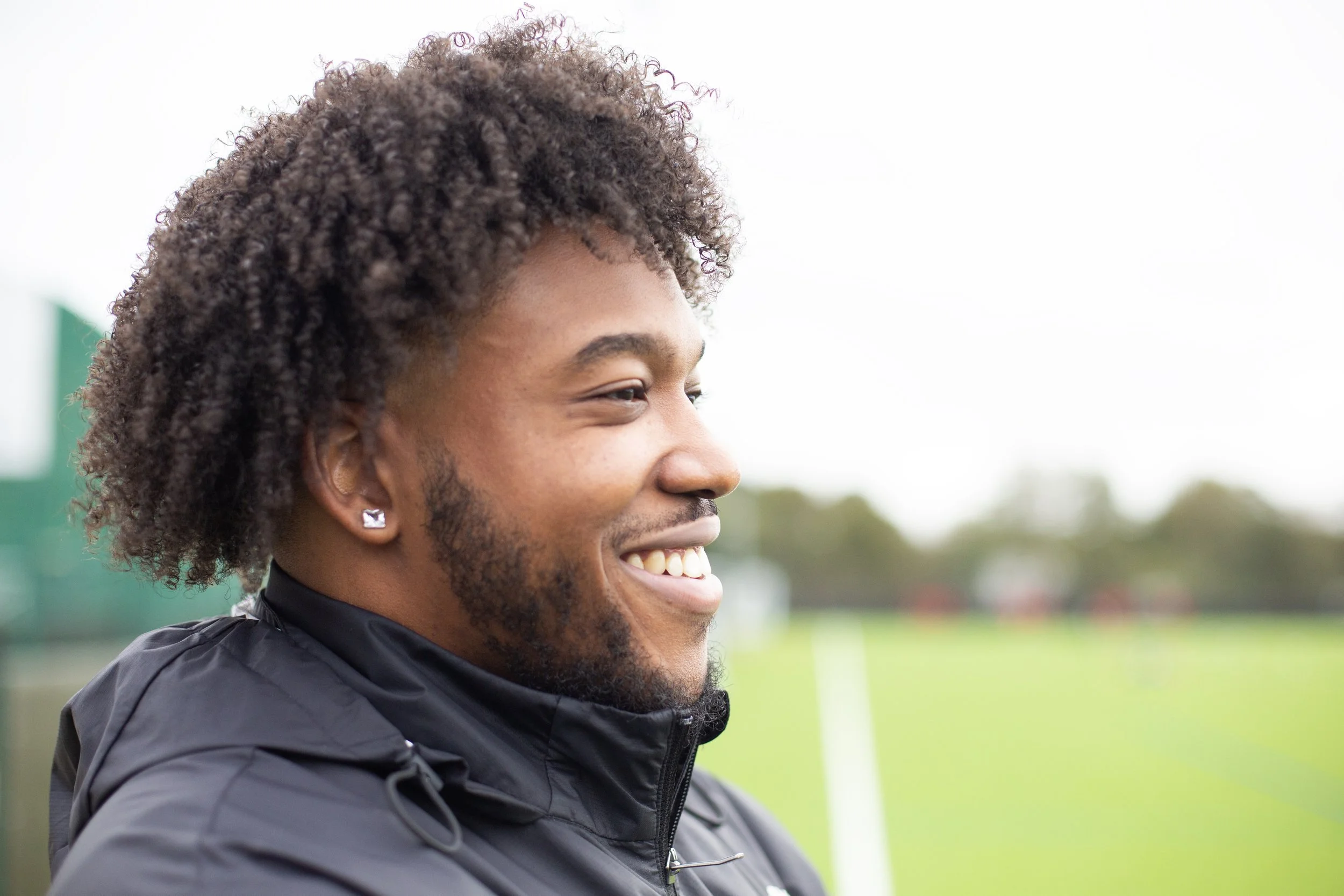
I first became involved with the Rio Ferdinand Foundation (RFF) when I was 18 years old, during my first year at the University of Salford, studying for a BSc in Sports Science. At that point in my life, I was driven but still figuring out what shape my future might take. I’d always had a passion for sport, human performance, and helping others, but I didn’t yet have a clear vision of how to turn that passion into a tangible career. I was balancing studies, part-time work, and trying to find real-world opportunities that would give me direction. Like many young people starting out, I had ambition, but not necessarily access.
I was looking for guidance, experience, mentorship, and a sense of belonging in a professional space that often felt difficult to reach for someone like me. Growing up in Greater Manchester, I saw firsthand how many talented young people lacked exposure to certain career pathways, particularly in health and sports science. What I needed at that time wasn’t just opportunity, but someone to believe in my potential. That’s exactly what the RFF became for me, a bridge between ambition and possibility.
Finding the Rio Ferdinand Foundation
I actually found out about the Foundation through my mum. She’d always supported my drive to build something meaningful in sport and healthcare, and she told me about the incredible work the Foundation was doing to connect young people with opportunities that could change the trajectory of their lives.
Through her encouragement, I reached out, and before long, I was introduced to the team and brought into one of their partnerships with Therapy-First, a physiotherapy and sports injury clinic in MediaCityUK. That partnership, and the Foundation’s investment in my development, became one of the most defining experiences of my early career.
The Foundation helped fund several key qualifications that shaped the professional I am today, including a Basic Massage Course, a VTCT Level 4 Sports Massage Diploma, and a First Aid qualification. These courses gave me the technical grounding to begin working confidently within sports therapy and opened my eyes to what a career in physiotherapy could look like.
But it wasn’t just funding - it was support in every sense. RFF also provided essential resources like laptops and iPads, tools that made it possible for me to study effectively, complete assignments, and apply for additional learning opportunities that might otherwise have been out of reach. Through Therapy-First and RFF, I was also given hands-on experience at major sporting events.
I supported the therapy team providing pre- and post-event sports massage at the Salford 10K, Tameside Tour, and BBC Sports Relief in MediaCity. These events placed me in a professional environment surrounded by experienced therapists, athletes, and organisers. I learned not only technical and manual skills but also what it meant to represent myself and my community in high-performance settings.
These experiences built my confidence and competence simultaneously. The Foundation didn’t just give me an opportunity - it gave me a platform to prove to myself that I belonged in these spaces.
Opportunities to Grow
Looking back, one of the standout moments for me was working at the BBC Sports Relief event in Media City. It was surreal. There I was, a university student, working shoulder-to-shoulder with qualified therapists and professional athletes, contributing to a major national sporting event. It was a moment that crystallised everything I’d been working towards - a moment where potential started to feel like reality. That experience, along with many others through RFF, allowed me to develop not just as a student, but as a professional in the making.
I learnt about communication under pressure, how to manage client expectations, and how to carry myself with professionalism and empathy. Those lessons have stuck with me far beyond the treatment room.
RFF also encouraged personal development - learning how to lead, to collaborate, and to give back.
The Foundation has a culture that encourages you to reflect on who you are and what kind of impact you want to have. For me, that impact has always been about representation - showing that young, Black, working-class men can thrive in clinical and elite sporting environments. The opportunities provided by RFF became a launchpad for everything that came next. They gave me the skills, belief, and exposure I needed to see my own potential more clearly. It helped me set goals that were not just ambitious but achievable. The Foundation showed me that professional excellence and social responsibility can (and should) go hand in hand.
Where I Am Now
When I graduated from university in 2019, my formal involvement with RFF naturally came to an end, but the lessons and values I gained continued to shape every stage of my journey.
Since then, I’ve gone on to complete a pre-registration master's in Physiotherapy at the University of Central Lancashire. I’ve achieved additional qualifications, including passing the ITMMiF (Intermediate Trauma Medical Management in Football) course, and I’m due to complete the ATMMiF (Advanced Trauma Medical Management in Football) course this November.
These accreditations have allowed me to work safely and effectively within elite football environments — an achievement that once felt out of reach without the foundation that RFF helped me build. Professionally, I’ve held physiotherapy roles within Accrington Stanley and Crewe Alexandra Football Club, where he worked as the U18 Academy Physiotherapist.
Alongside my full-time role in football, I continue to work part-time at Therapy-First, the same clinic where I began my journey through RFF - a full-circle experience that constantly reminds me where my growth began.
I also continue to develop my own physiotherapy brand - The Kaizen Clinic - a platform that embodies continuous improvement and accessible, ethical care. Through it, I aim to support athletes, mothers, and individuals dealing with recurring injuries or chronic pain, particularly those from ethnically minoritised communities who often face barriers to accessing timely and equitable physiotherapy care.
Why Opportunities Like These Matter
The Rio Ferdinand Foundation represents more than opportunity - it represents equality, equity, and empowerment.
For young people from diverse backgrounds, opportunities like these are not just beneficial; they are transformative. They provide the structure, resources, and mentorship that bridge the gap between talent and access. Without that bridge, too many young people with incredible potential never get to realise it.
In my experience, young people in Greater Manchester don’t always have the same access to development programmes or industry connections that those in London might benefit from. There’s incredible talent in the North, but often less visibility, fewer funded pathways, and limited awareness of where certain skills can take you.
That’s why platforms like RFF are so important - they decentralise opportunity. They bring exposure and professional access to areas that need it most. Beyond professional skills, initiatives like RFF build confidence, community, and cultural capital - things that are often overlooked but essential for long-term success. They help young people see value in themselves and teach them how to translate that value into action.
When I reflect on my journey, I realise that RFF didn’t just support my education or skill development - it reshaped my belief in what was possible. It showed me that representation in sport, health, and leadership matters, and that my success could, in turn, create pathways for others coming after me.
It's like having an older family member who wants the best for you
For me, the Rio Ferdinand Foundation felt almost like having an older family member who genuinely wants the best for you, someone who looks out for you, offers guidance, and helps you make better decisions for your future. It didn’t just support me academically or professionally; it supported me as a person. Looking back, I can confidently say that RFF played a defining role in helping me transition from a student with ambition to a professional with purpose. The Foundation gave me the belief and the blueprint to pursue excellence, not only for myself but for my community.
That’s what makes RFF so special: it’s not just about opportunity, it’s about legacy. It’s about investing in young people who, in turn, invest back into others. And that’s something I’ll always be proud to have been part of.
